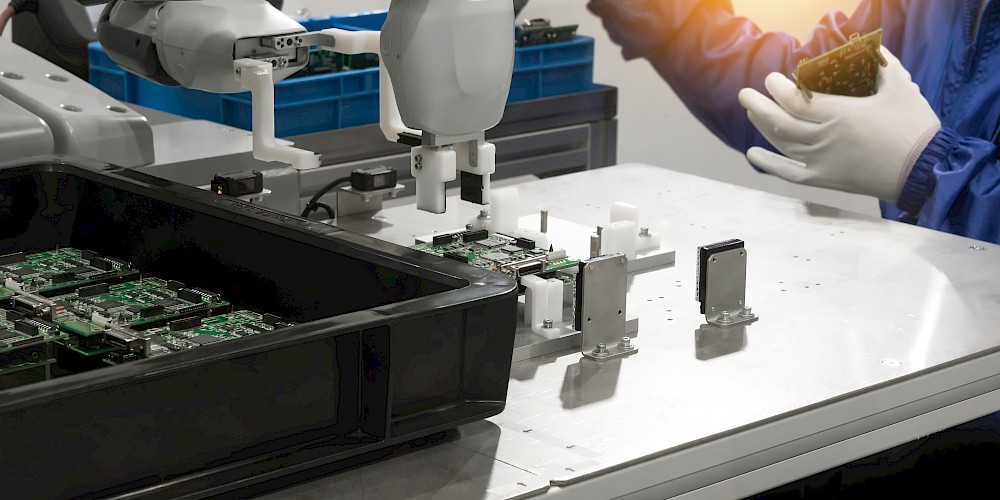
Acoustic Proximity Skin Layers Establish Collision-Free Bubbles in Collaborative Spaces
As collaborative humanoid robots operate in increasingly close physical proximity to human workers on shared factory floors, relying solely on traditional computer vision or post-impact tactile skin layers leaves a dangerous reaction window that can result in accidental bruising or collisions during rapid movements. Closing this critical safety gap, industrial safety engineers have engineered distributed acoustic proximity skin layers composed of flexible elastomer sheets embedded with microscopic piezoelectric transducer rings across the robot's torso, arms, and shoulders. These distributed transducers continuously emit and monitor high-frequency ultrasonic waves, establishing a real-time 'collision-free safety bubble' extending several centimeters outward from the robot's physical surface. When an unexpected human limb or foreign object enters this immediate acoustic perimeter, the localized sound wave reflections shift instantaneously, signaling the onboard safety processor to initiate smooth, anticipatory braking curves and velocity scaling before any physical contact occurs. Comprehensive collaborative testing in fast-paced automotive manufacturing lines demonstrated that acoustic proximity skins eliminated emergency hard stops completely by replacing abrupt halts with fluid, human-aware deceleration profiles. Safety compliance officers highlighted that establishing continuous non-contact safety bubbles dramatically reduces worker anxiety and redefines industry standards for safe human-robot collaboration.